
清嘉慶 白玉碗|Bowl
Unknown Artist
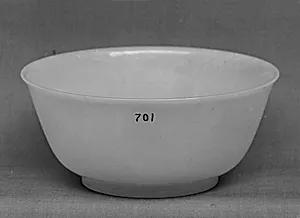
Medium
Jade (nephrite)
Dimensions
H. 2 1/2 in. (6.3 cm); Diam. 5 5/8 in. (14.3 cm)
Classification
Jade
Culture & Period
China · Qing dynasty (1644–1911), Jiaqing period (1796–1820)
Department
Asian Art
Museum
Metropolitan Museum of Art, New York, NY
Credit
Gift of Heber R. Bishop, 1902
Accession Number
02.18.701
Rights
Public Domain
Art Historical Context
This elegant white jade bowl hails from China's Qing dynasty during the Jiaqing period (6–1820), a time of refined imperial craftsmanship when nephrite jade—prized for its creamy translucency and durability—was a symbol of purity, virtue, and elite status. Standing just 2½ inches tall with a 5⅝-inch diameter, its simple, flared form exemplifies the understated luxury of scholarly and courtly objects, likely used for offerings, tea, or elixirs in refined households. Nephrite jade, sourced from regions like Hetian in Xinjiang, was meticulously carved and polished to a luminous sheen, revealing the stone's natural veining and subtle milky hues. Qing artisans mastered techniques like incising and hollowing to achieve thin walls without sacrificing strength, transforming a functional vessel into a sculptural masterpiece. Such bowls reflect the era's reverence for jade as a "stone of heaven," embodying Confucian ideals of moral perfection. Today, this treasure resides in the Metropolitan Museum of Art's Asian Art collection, a gift from Heber R. Bishop in 1902, inviting us to appreciate the timeless allure of imperial China's material culture.