
Bowl
Unknown Artist
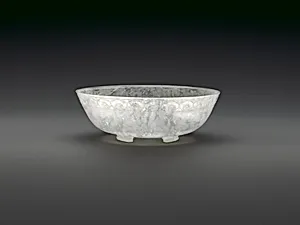
Medium
Jadeite
Dimensions
H. 2 3/16 in. (5.5 cm); W. 6 7/16 in. (16.4 cm)
Classification
Jade
Culture & Period
China · Qing dynasty (1644–1911), Qianlong period (1736–95)
Department
Asian Art
Museum
Metropolitan Museum of Art, New York, NY
Credit
Gift of Heber R. Bishop, 1902
Accession Number
02.18.488
Rights
Public Domain
Art Historical Context
This exquisite jadeite bowl, crafted during China's Qing dynasty Qianlong period (173695), exemplifies the imperial era's mastery of luxury craftsmanship. Measuring just 2 3/16 inches high 6 7/16 inches wide, its petite, shallow form was ideal for serving delicate delicacies or ritual offerings among the elite. Jadeite, a vibrant green variety of jade rarer and more translucent than nephrite, was highly prized for its luminous quality, symbolizing purity, immortality, and imperial virtue in Chinese culture. During the Qianlong emperor's reign—one of China's most opulent artistic golden ages—imperial workshops in Beijing produced unparalleled jade carvings, often sourced from Burmese mines. Artisans employed meticulous techniques like incising, drilling, and polishing to transform the tough stone into functional yet sculptural objects, showcasing technical virtuosity and aesthetic refinement. This bowl reflects that tradition, its smooth contours and subtle sheen evoking the natural world's harmony. A gift to the Metropolitan Museum of Art from Heber R. Bishop in 1902, it now graces the Asian Art department, inviting visitors to ponder the sophistication of Qing connoisseurship. Though the artist remains unknown, the bowl's survival speaks to its enduring cultural prestige.