
Bowl
Unknown Artist
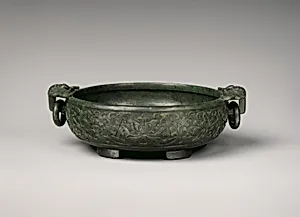
Medium
Nephrite, spinach-green lightly flecked with black
Dimensions
H. 3 3/8 in. (8.5 cm); W. 11 13/16 in. (30 cm)
Classification
Jade
Culture & Period
China · Qing dynasty (1644–1911), Qianlong period (1736–95)
Department
Asian Art
Museum
Metropolitan Museum of Art, New York, NY
Credit
Gift of Heber R. Bishop, 1902
Accession Number
02.18.687
Rights
Public Domain
Art Historical Context
This elegant spinach-green nephrite jade bowl, crafted during China's Qing dynasty Qianlong period (173695), exemplifies the imperial era's mastery of jade carving. Measuring just 3⅜ inches high and nearly 12 inches wide, its shallow, wide form suggests it served both practical and ceremonial purposes, perhaps for offerings or displaying delicacies at court banquets. The lightly flecked black inclusions enhance the stone's natural beauty, a prized "spinach-green" variety sourced from regions like Hetian, evoking the lush vitality of imperial gardens. Qianlong jade workshops, under the emperor's patronage, perfected techniques like meticulous hollowing, precise polishing, and subtle incising to reveal the stone's translucency and luster. Nephrite, tougher than silk and revered since ancient times, symbolized purity, immortality, and virtue in Chinese culture—qualities fit for the Son of Heaven. This bowl's flawless execution reflects the period's technical pinnacle, where artisans transformed raw boulders into flawless objets d'art. A generous gift from collector Heber R. Bishop in 1902, it now graces the Metropolitan Museum of Art's Asian Art collection, inviting visitors to ponder the enduring allure of Chinese jade craftsmanship.