
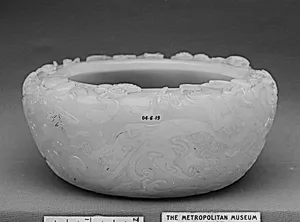
Bowl
Unknown Artist
Medium
Jade
Dimensions
H. 2 3/4 in. (7 cm); W. 6 in. (15.2 cm)
Classification
Jade
Culture & Period
China · Qing dynasty (1644–1911), Qianlong period (1736–95)
Department
Asian Art
Museum
Metropolitan Museum of Art, New York, NY
Credit
The F.O. Matthiessen Collection, Gift of Mrs. Emma Matthiessen, in memory of her husband, 1903
Accession Number
04.6.19
Rights
Public Domain
Art Historical Context
This elegant jade bowl, crafted during China's Qing dynasty Qianlong period (173695), exemplifies the pinnacle of imperial jade artistry. Measuring just 2¾ inches high and 6 inches wide, its compact form belies the masterful skill required to shape the notoriously hard stone. Donated to the Metropolitan Museum of Art 1903 from the F.O. Matthi Collection, it hails from a time when jade—revered for its luminous translucency and symbolic ties to purity and immortality—was a material fit for emperors. The Qianlong era marked a renaissance in jade carving, with imperial workshops producing luxurious vessels like this one for ceremonial use or as status symbols among the elite. Artisans employed intricate techniques, such as incising delicate patterns and polishing surfaces to a glassy sheen, transforming raw nephrite or jadeite into objects of profound beauty. Though the bowl's exact design remains understated in records, its survival speaks to the enduring value placed on such pieces. In Chinese culture, jade bowls bridged the utilitarian and the divine, often used in rituals or scholarly pursuits. This artifact invites us to appreciate the Qing court's opulence and the timeless allure of jade, a stone that has captivated collectors for centuries.