
Bowl
Unknown Artist
19th century
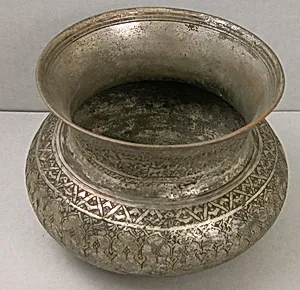
Medium
Tinned copper
Dimensions
H. 6 in. (15.2 cm) Diam. 8 9/16 in. (21.7 cm)
Classification
Metal
Department
Islamic Art
Museum
Metropolitan Museum of Art, New York, NY
Credit
Rogers Fund, 1907
Accession Number
07.67.18
Rights
Public Domain
Art Historical Context
This elegant tinned copper bowl, crafted by an unknown artist in the19th century, exemplifies refined metalworking traditions of the Islamic world. Standing 6 inches tall with a diameter of 89/16 inches, it was designed for practical use—likely in a household setting for serving food or water. Acquired by The Metropolitan Museum of Art through Rogers Fund in 190, it now resides in the Islamic Art department, offering a glimpse into everyday artistry from a vibrant era. Tinned copper was a favored medium in Islamic metalcraft, where sheets of copper were hammered into shape and coated with a thin layer of molten tin. This technique not only created a smooth, silvery surface resistant to tarnish but also made the vessel safe for food contact, enhancing its durability for daily life. By the 19th century, such bowls bridged centuries-old Ottoman, Persian, or North African workshops, blending functionality with subtle aesthetic appeal amid growing global influences. Though unadorned in surviving details, this bowl highlights the cultural importance of metalwork in Islamic societies, where humble objects embodied skilled craftsmanship and communal rituals. Visitors can appreciate how it reflects a legacy of innovation in utilitarian art, inviting reflection on the artistry hidden in the ordinary.