
Bowl
Unknown Artist
14th century
Medium
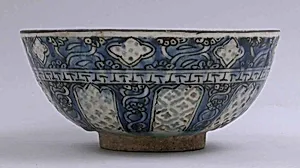
Stonepaste; underglaze blue and black, transparent, colorless glaze, pierced sides
Classification
Ceramics
Department
Islamic Art
Museum
Metropolitan Museum of Art, New York, NY
Credit
Rogers Fund, 1907
Accession Number
07.238.8
Rights
Public Domain
Art Historical Context
This exquisite 14th-century stonepaste bowl from the Islamic world exemplifies the pinnacle of medieval ceramic artistry. Crafted during a period of cultural flourishing under Mongol Ilkhanid patronage in Persia (modern-day Iran), such vessels were prized for both everyday use and display in affluent households. Acquired through the Rogers Fund in 1907, it now graces the Metropolitan Museum of Art's Islamic Art department, highlighting the sophistication of pre-modern pottery traditions. The bowl's medium reveals masterful techniques: stonepaste (a composite of quartz, clay, and frit) created a durable, porcelain-like body that allowed for intricate piercing on the sides, forming delicate openwork patterns that filter light beautifully. Underglaze decoration in vibrant cobalt blue and black, sealed under a transparent colorless glaze, ensured lasting color vibrancy—a innovation that influenced global ceramics. These pierced designs not only enhanced aesthetics but also served practical purposes, like draining liquids or displaying fruits. As an anonymous artisan's creation, the bowl embodies the collaborative genius of Islamic workshops, where geometric motifs and fluid lines conveyed harmony and infinity, core tenets of the faith. A testament to technological ingenuity, it invites visitors to appreciate how 14th-century potters transformed humble clay into luminous luxury.