
Bowl
Unknown Artist
late 12th–13th century
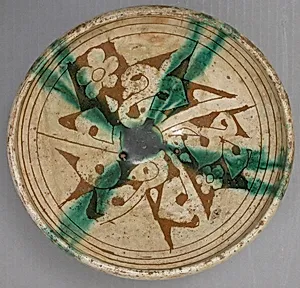
Medium
Earthenware; white slip covered, glazed
Dimensions
H. 4 1/4 in. (10.8 cm) Diam. 9 in. (22.9 cm)
Classification
Ceramics
Department
Islamic Art
Museum
Metropolitan Museum of Art, New York, NY
Credit
Purchase, Edward C. Moore Jr. Gift, 1927
Accession Number
27.13.6
Rights
Public Domain
Art Historical Context
This elegant earthenware bowl, crafted by an unknown artist in the 12th–13th century, exemplifies the refined ceramics of the medieval Islamic world. Housed in the Metropolitan Museum of Art's Islamic Department (purchased with the Edward C. Moore. Gift in 1927), it measures a modest4¼ inches high and 9 inches diameter—perfect for daily use yet showcasing artisanal mastery. During this era, under Seljuk and early post-Seljuk patronage, pottery flourished across regions like Persia and Syria, blending functionality with aesthetic splendor. The bowl's medium is key to its allure: a sturdy earthenware body coated in white slip—a thin layer of refined clay that created a smooth, porcelain-like canvas—and finished with a glossy glaze. This technique, perfected by Islamic potters, prevented cracking during firing and allowed for vibrant underglaze decoration (though specifics here are unadorned in record). It democratized beauty, making ornate vessels accessible beyond elite metalwork, and influenced global ceramics traditions. Step closer to admire how this unassuming bowl bridges utility and culture, whispering of bustling bazaars and scholarly courts where such objects held both practical and symbolic value. A timeless treasure! (198 words)