
Bowl
Unknown Artist
12th century
Medium
Earthenware; glazed
Dimensions
H. 3 3/8 in. (8.6 cm) Diam. 12 1/2 in. (31.8 cm)
Classification
Ceramics
Department
Islamic Art
Museum
Metropolitan Museum of Art, New York, NY
Credit
H. O. Havemeyer Collection, Gift of Horace Havemeyer, 1929
Accession Number
29.160.13
Rights
Public Domain
Tags
Art Historical Context
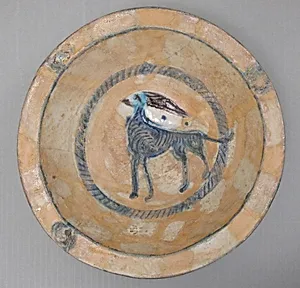
This elegant 12th-century earthenware bowl, hailing from the Islamic world, exemplifies the exquisite ceramics produced during a golden age of artistic innovation. Measuring just 3⅜ inches (8.6 cm) in height but boasting a generous 12½-inch (31.8 cm), its wide, shallow form was ideal for serving food or drink in daily life or communal gatherings. The glossy glaze not only enhanced its waterproof quality—making it practical for use—but also provided a vibrant canvas for decoration, a technique perfected by Islamic potters who transformed humble clay into luminous works of art. Animal motifs, hinted at in its design, were a hallmark of 12th-century Islamic ceramics, often depicting creatures in dynamic friezes that celebrated the natural world and conveyed cultural narratives of harmony and vitality. These bowls bridged utility and beauty, reflecting the era's mastery of glazing under dynasties like the Seljuks, where such vessels were traded across vast regions from Persia to the Mediterranean. Today, this piece from the H.O. Havemeyer Collection—generously gifted to the Metropolitan Museum of Art in 1929—invites us to appreciate the anonymous artisan's skill and the enduring allure of Islamic artistry. A testament to cross-cultural exchange, it reminds visitors of how everyday objects can embody profound historical depth.