
Bowl
Unknown Artist
late 9th–early 10th century
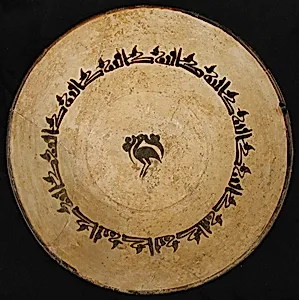
Medium
Earthenware; white slip with black slip decoration under transparent glaze
Dimensions
H. 2 15/16 in. (7.5 cm) Diam. 9 3/4 in. (24.8 cm)
Classification
Ceramics
Department
Islamic Art
Museum
Metropolitan Museum of Art, New York, NY
Credit
Rogers Fund, 1936
Accession Number
36.20.62
Rights
Public Domain
Tags
Art Historical Context
This elegant earthenware bowl, crafted an unknown artist in the 9th to early 10th century exemplifies the refined ceramics of the Islamic world during the Abbasid era. Measuring just under 3 inches high and nearly 10 inches across, its wide, shallow form was ideal for serving fruits, sweets, or beverages at communal meals, reflecting the hospitality central to Islamic culture. The bowl's surface features a white slip base— a creamy engobe applied over the clay—adorned with bold black slip decoration of birds, then sealed under a transparent glaze that lends a subtle sheen and protects the vibrant design. The technique of slip decoration under glaze, pioneered in regions like Iraq (possibly Basra), marked a technical leap in Islamic pottery. It allowed artisans to paint intricate motifs with precision before firing, creating durable, glossy wares that mimicked costly Chinese porcelain imports. Bird imagery, a recurring motif in Islamic art, often evoked paradise gardens or the soul's freedom, blending naturalism with symbolic depth. Housed in the Metropolitan Museum of Art's Islamic Art Department (acquired via the Rogers Fund in 1936), this bowl highlights the era's artistic innovation, bridging utility and beauty in everyday objects. Visitors will appreciate its timeless poise, a window into a golden age of craftsmanship.