
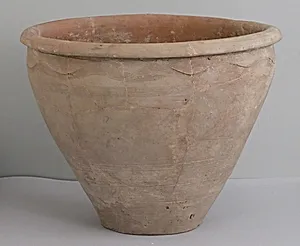
Bowl
Unknown Artist
10th century
Medium
Earthenware; slip covered and incised, unglazed
Dimensions
Ht. 10 5/8 in. (27 cm) Diam. 13 3/4 in. (35 cm)
Classification
Ceramics
Department
Islamic Art
Museum
Metropolitan Museum of Art, New York, NY
Credit
Rogers Fund, 1938
Accession Number
38.40.121
Rights
Public Domain
Art Historical Context
This elegant earthenware bowl, created in the 10th century, exemplifies the refined ceramic traditions of the Islamic world during a period of great artistic innovation. Measuring over a foot in diameter, its generous size suggests it may have served both practical and decorative purposes in a household or ceremonial setting. The piece belongs to the Metropolitan Museum of Art’s distinguished collection of Islamic Art, acquired through the Rogers Fund in 1938. What makes this bowl particularly noteworthy is its sophisticated surface treatment. Artisans first covered the earthenware with a layer of slip—a fine liquid clay—before incising intricate designs into the surface. Left unglazed, the resulting contrast between the smooth slip and the exposed clay body creates a subtle, tactile beauty that highlights the skill of the unknown maker. Such techniques allowed for expressive patterns while remaining durable for everyday use. As a window into medieval Islamic craftsmanship, this bowl reflects the era’s emphasis on transforming humble materials into objects of quiet elegance. Its survival offers visitors a tangible connection to the daily lives and aesthetic values of people living a thousand years ago.