
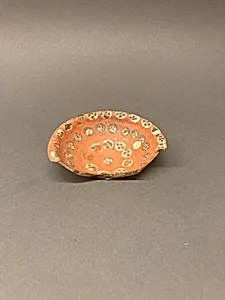
Bowl
Unknown Artist
9th century
Medium
Earthenware; red slip with polychrome slip decoration under transparent glaze
Dimensions
H. 1 1/4 in. (3.2 cm) Diam. 4 1/2 in. (11.4 cm)
Classification
Ceramics
Department
Islamic Art
Museum
Metropolitan Museum of Art, New York, NY
Credit
Rogers Fund, 1938
Accession Number
38.40.206
Rights
Public Domain
Art Historical Context
This delicate 9th-century earthen bowl, hailing from the Islamic world, exemplifies the artistry of early medieval ceramics. Measuring just 1¼ inches high and 4½ inches diameter, its petite scale suggests it was designed for everyday use—perhaps holding spices, sweets, or small offerings. Crafted with a red slip base and adorned with vibrant polychrome slip decoration under transparent glaze, the bowl's surface would have shimmered with colorful motifs, a technique that allowed intricate patterns to emerge vividly while protecting the fragile clay. In the Islamic art tradition of the Abbasid era, such slipware represented a pinnacle of technical innovation. Potters applied liquid clay slips in multiple hues before firing, creating layered designs that fused seamlessly under the clear glaze—a method that balanced functionality with aesthetic splendor. This piece highlights the era's mastery of ceramics, bridging utility and beauty in a time when Islamic artisans led global advancements in glazed pottery. Acquired through the Rogers Fund in 1938, this bowl now graces the Metropolitan Museum of Art's Islamic Art department, offering a tangible glimpse into a vibrant cultural heritage where everyday objects became canvases for creativity.