
Bowl
Unknown Artist
10th century
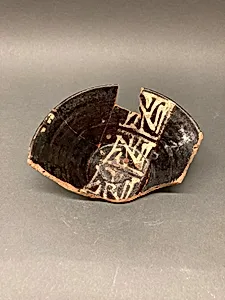
Medium
Earthenware; reddish body, purplish slip, white slip decoration under greenish glaze
Dimensions
H. 1 15/16 in. (4.8 cm) W. 6 in. (15.2 cm) D. 4 1/8 in. (10.5 cm) Wt. 4.4 oz. (125 g)
Classification
Ceramics
Department
Islamic Art
Museum
Metropolitan Museum of Art, New York, NY
Credit
Rogers Fund, 1940
Accession Number
40.170.301
Rights
Public Domain
Art Historical Context
This charming 10th-century earthen bowl, hailing from the Islamic world, exemplifies the refined artistry of medieval ceramics. Standing just under 2 inches tall and spanning 6 inches wide, its reddish body is enhanced by purplish slip and intricate white slip decoration, all sealed beneath a shimmering greenish glaze. Such modest dimensions and lightweight form (4.4 ounces) suggest it served as practical tableware, yet its luminous surface elevates it to a treasured artifact. In the Islamic tradition, slipware techniques like these—applying colored slips for decorative motifs before glazing—marked a pinnacle of innovation during the 10th century. This method produced durable, vibrant pieces resistant to the era's culinary demands while showcasing potters' skill in color layering and controlled firing. Though the artist remains unknown, the bowl reflects broader cultural flourishing under caliphates, where ceramics bridged utility and aesthetics, influencing trade across Eurasia. Today, gifted through the Rogers Fund in 1940, it graces the Metropolitan Museum of Art's Islamic Art department, inviting us to appreciate how everyday objects captured the ingenuity of a golden age.