
Bowl
Unknown Artist
late 11th–12th century
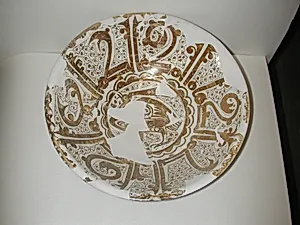
Medium
Earthenware; luster-painted on opaque white glaze under transparent colorless glaze
Dimensions
H. 4 1/2 in. (11.4 cm) Diam. 13 3/4 in. (34.9 cm)
Classification
Ceramics
Department
Islamic Art
Museum
Metropolitan Museum of Art, New York, NY
Credit
Rogers Fund, 1945
Accession Number
45.138
Rights
Public Domain
Art Historical Context
This elegant earthenware bowl, crafted in the late 11th12th century, exemplifies pinnacle of Islamic ceramic artistry from the Metropolitan Museum of Art's Islamic Art collection. Measuring 4½ inches high and an impressive 13¾ inches in diameter, its wide, shallow form was ideal for serving fruits, sweets, or communal dishes in affluent households, blending everyday utility with luxurious decoration. The bowl's medium—luster-painted on an white glaze under a transparent one—highlights a sophisticated technique developed in the Islamic world around the 9th century and refined during this Seljuk-era period. Artisans applied metallic oxides to the unfired glaze, firing it in a reducing atmosphere to produce a shimmering, iridescent luster that mimics gold or silver. This labor-intensive process, often centered in regions like Iraq, Iran, and Syria, symbolized wealth and technical mastery, elevating pottery to the status of fine art formerly reserved for metalwork. Acquired through the Rogers Fund in 1945, this anonymous masterpiece invites us to appreciate how Islamic potters democratized opulence, their innovations influencing ceramics across Eurasia for centuries.