
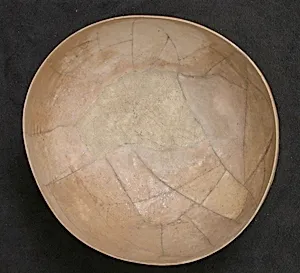
Bowl
Unknown Artist
12th–13th century
Medium
Stonepaste; molded and glazed
Dimensions
H. 3 9/16 in. (9 cm) Diam. 7 3/16 (18.3 cm)
Classification
Ceramics
Department
Islamic Art
Museum
Metropolitan Museum of Art, New York, NY
Credit
Purchase, Mrs. Samuel B. Grimson Gift, 1970
Accession Number
1970.25
Rights
Public Domain
Art Historical Context
This elegant stonepaste bowl, crafted by an unknown artist in the 12th–13th century, exemplifies the refined ceramic traditions of the Islamic world. Measuring just 3 9/16 inches high and 7 3/16 inches in diameter, its modest size belies its sophisticated construction. Stonepaste, also known as fritware, was a groundbreaking medium developed by Islamic potters to mimic the translucency and durability of Chinese porcelain, which was highly prized but unavailable locally. The bowl was molded into shape and coated with a glossy glaze, techniques that allowed for intricate forms and vibrant finishes resilient to daily use. Housed in the Metropolitan Museum of Art's Department of Islamic Art (purchase, Mrs. Samuel B. Grimson Gift, 1970), this piece reflects the artistic ingenuity of medieval Islamic artisans, likely from regions like Iran or Syria during the Seljuk era. Ceramics like this served both practical purposes—such as serving food or beverages—and aesthetic ones, adorning homes and palaces. The molded body hints at possible decorative motifs, though undecorated examples highlight the material's inherent beauty. Today, such bowls offer a window into a vibrant culture where technology and artistry intertwined, producing wares that traveled along trade routes, influencing global ceramics for centuries. A true gem for any visitor's virtual tour!