
Bowl
Unknown Artist
14th–15th century
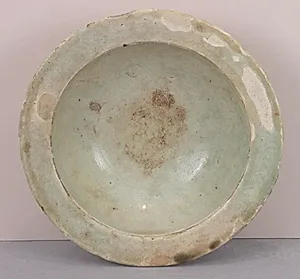
Medium
Composite body; monochrome glaze
Dimensions
H. 2 3/4 in. (7 cm) Diam. 9 3/8 in.. (23.8 cm)
Classification
Ceramics
Department
Islamic Art
Museum
Metropolitan Museum of Art, New York, NY
Credit
Gift of Irma B. Wilkinson, in memory of her husband, Charles K. Wilkinson, 1988
Accession Number
1988.44.5
Rights
Public Domain
Art Historical Context
This elegant bowl from the 14th–15th exemplifies the refined ceramic traditions of the Islamic world. Crafted with a composite body—likely a sophisticated fritware mixture of quartz, clay, and glass frit that mimicked the prized porcelain of China—this shallow vessel stands just 2¾ inches (7 cm) high and measures 9⅜ inches (23.8 cm) in diameter. Its glaze, a hallmark of later Islamic pottery, provided a smooth, lustrous surface in a single hue, often turquoise or cobalt blue, enhancing both durability and aesthetic appeal. During this period, Islamic artisans in regions like Persia and Syria mastered these techniques amid flourishing trade routes and patronage from courts such as the Timurids and Mamluks. The composite body allowed for thin, translucent walls that were technically innovative, while the monochrome glaze reflected a shift toward understated elegance over earlier polychrome designs. Such bowls were everyday luxuries, used for serving fruits, sweets, or beverages, blending functionality with artistry. Today, this piece graces the Metropolitan Museum of Art's Islamic Art department, a gift from Irma B. Wilkinson in memory of her husband, Charles K. Wilkinson, in 1988. It invites us to appreciate the anonymous craftsman's skill and the enduring cultural legacy of Islamic ceramics.