
Bowl
Unknown Artist
8th–9th century
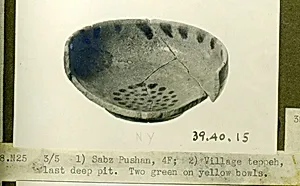
Medium
Earthenware; green decoration and opaque yellow glaze
Dimensions
Overall: H. 1 1/2 in. (3.8 cm) Diam. 3 15/16 in. (10 cm) Base: Diam. 2 1/16 in. (5.2 cm)
Classification
Ceramics
Department
Islamic Art
Museum
Metropolitan Museum of Art, New York, NY
Credit
Rogers Fund, 1939
Accession Number
39.40.15
Rights
Public Domain
Art Historical Context
This delicate earthenware bowl, crafted by an unknown artist in the8th–9th, exemplifies the early flowering of Islamic ceramic artistry. Measuring just 1 1/2 inches high and nearly 4 inches in diameter, its petite scale suggests it was designed for intimate use—perhaps holding spices, confections, or cosmetics in a bustling household of the Abbasid era. Housed in the Metropolitan Museum of Art's Islamic Department (acquired via the Rogers in 1939), it reflects the vibrant pottery traditions of regions like Iraq or Iran, where potters transformed everyday objects into luminous treasures. The bowl's standout feature is its green decoration over an opaque yellow glaze, a technique that marked a revolutionary advance in Islamic ceramics. Earthenware bodies were coated with lead-based glazes fired at low temperatures, creating a shiny, impermeable surface that protected contents and added aesthetic splendor. These vivid hues—evoking lush gardens or precious gems—held cultural resonance, symbolizing paradise in Islamic art and poetry. Though simple in form, the bowl's glossy finish and color harmony highlight the era's mastery of glaze chemistry, bridging utilitarian craft with artistic innovation. Visitors will appreciate how such modest vessels offer a window into daily life during Islam's Golden Age, when trade along the Silk Road spread techniques far and wide, influencing ceramics across Eurasia.