
Bowl
Unknown Artist
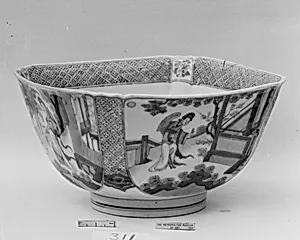
Medium
Porcelain decorated in underglaze blue
Dimensions
H. 3 3/4 in. (9.5 cm.); W. 7 1/8 in. (18.1 cm) Diam. of foot: 3 3/8 in. (8.6 cm)
Classification
Ceramics
Culture & Period
China · Qing dynasty (1644–1911), Kangxi period (1662–1722)
Department
Asian Art
Museum
Metropolitan Museum of Art, New York, NY
Credit
H. O. Havemeyer Collection, Bequest of Mrs. H. O. Havemeyer, 1929
Accession Number
29.100.311
Rights
Public Domain
Art Historical Context
This elegant porcelain bowl hails from China's Qing dynasty, specifically the Kangxi period (1662–1722), a golden era for imperial porcelain production at Jingdezhen kilns. Measuring just 3¾ inches high and 7⅛ inches wide, its modest scale belies the technical mastery involved: cobalt blue decoration applied in underglaze technique, where pigments are painted onto the unfired clay body before a transparent glaze is added and the piece is fired at high temperatures. This method ensured vibrant, durable colors that wouldn't fade, making such wares prized for both daily use and export. Kangxi blue-and-white porcelain represents the pinnacle of ceramic innovation, blending Ming dynasty traditions with refined imperial tastes under Emperor Kangxi's patronage. These bowls often featured intricate motifs—though specifics here are undocumented—symbolizing prosperity, nature, or mythology, reflecting Confucian ideals of harmony. Exported widely via maritime trade, they captivated European collectors and influenced global ceramics. A gem from the H.O. Havemeyer Collection, bequeathed to The Metropolitan Museum of Art in 1929, this anonymous masterpiece invites us to appreciate the anonymous artisans whose skill shaped centuries of cultural exchange.