
Bowl
Unknown Artist
18th century
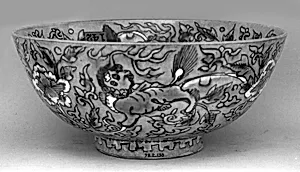
Medium
Porcelain painted in enamels on the biscuit
Dimensions
H. 3 7/16 in. (8.7 cm); Diam. 7 7/8 in. (20 cm)
Classification
Ceramics
Culture & Period
China · Qing dynasty (1644–1911)
Department
Asian Art
Museum
Metropolitan Museum of Art, New York, NY
Credit
Purchase by subscription, 1879
Accession Number
79.2.130
Rights
Public Domain
Tags
Art Historical Context
This elegant porcelain bowl, created in 18th-century China during the Qing dynasty, reflects the refined ceramic traditions of one of the most prosperous eras in Chinese art history. Produced under a period when imperial patronage elevated porcelain to new heights of technical and aesthetic achievement, the piece embodies the dynasty’s emphasis on harmonious design and symbolic decoration. Its modest size and graceful proportions suggest it was likely intended for scholarly or ceremonial use, highlighting the integration of art into daily refinement. The bowl’s medium—porcelain painted in enamels on the biscuit—represents a sophisticated technique in which the vessel was first fired unglazed at high temperature, then adorned with colorful enamels and refired at a lower heat. This method allowed for vibrant, layered hues that could capture intricate details without the constraints of underglaze painting. Decorated with motifs of mythical creatures and flowers, the surface likely draws on longstanding Chinese symbolism, where such imagery conveyed wishes for prosperity, protection, and natural beauty. Acquired by the Metropolitan Museum in 1879 through subscription, this work stands as an early testament to Western appreciation for Qing ceramics. Its enduring appeal lies in the balance between technical mastery and poetic decoration, offering visitors a glimpse into the cultural values and artistic excellence of imperial China.