
Bowl
Unknown Artist
18th–19th century
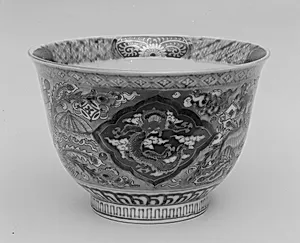
Medium
Porcelain decorated in red-orange, blue, green and gilt (Arita ware, Imari style)
Dimensions
H. 5 11/16 in. (14.4 cm); Diam. 8 5/8 in. (21.9 cm)
Classification
Ceramics
Culture & Period
Japan · Edo period (1615–1868)
Department
Asian Art
Museum
Metropolitan Museum of Art, New York, NY
Credit
Gift of Mrs. Edward H. Wells, 1953
Accession Number
53.193.5
Rights
Public Domain
Tags
Art Historical Context
This exquisite porcelain bowl, crafted by an unknown artist during Japan's Edo period (18th–19th century), exemplifies the celebrated Arita ware in Imari style. Standing 5 11/16 inches high and 8 5/8 inches in diameter, it features vibrant overglaze enamels in red-orange (a signature iron-red), blue, green, and shimmering gilt. Produced in the kilns of Arita in Saga Prefecture, these wares were prized for their technical precision and bold aesthetic, blending functionality with opulent decoration. During the Edo era (1615–1868), a time of relative peace and cultural flourishing, Japanese porcelain production surged to meet domestic and export demands, particularly to Europe. Imari-style pieces like this bowl became international sensations, influencing Western ceramics with their vivid polychrome palettes and intricate motifs—here, likely featuring powerful dragons, symbols of imperial strength, protection, and auspicious energy in Japanese lore. The meticulous application of enamels fired at low temperatures allowed for rich detailing without compromising the porcelain's translucent purity. Donated to the Metropolitan Museum of Art in 1953, this bowl offers a window into Edo Japan's masterful ceramic legacy, where everyday objects transcended utility to embody artistic splendor.