
Bowl
Unknown Artist
late 17th–early 18th century
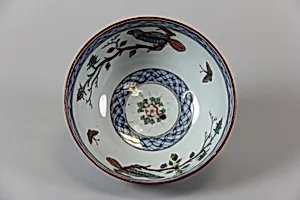
Medium
Porcelain painted in underglaze blue, with overglaze polychrome enamels of a later date
Dimensions
H. 3 1/8 in. (7.9 cm); Diam. 5 7/8 in. (14.9 cm)
Classification
Ceramics
Culture & Period
China · Qing dynasty (1644–1911), Kangxi period (1662–1722)
Department
Asian Art
Museum
Metropolitan Museum of Art, New York, NY
Credit
Purchase by subscription, 1879
Accession Number
79.2.466
Rights
Public Domain
Tags
Art Historical Context
This elegant porcelain bowl hails from China's Qing dynasty during the Kangxi period (2–1722), a golden age for imperial porcelain production renowned for its technical mastery and export to Europe. Crafted in the late 17th to early 18th century it exemplifies the era's blue-and-white wares, which became symbols of luxury worldwide. Measuring just 3 1/8 inches high 5 7/8 inches in diameter its modest size belies its refined beauty, making it ideal for tea ceremonies or as a decorative table piece. The bowl features underglaze blue painting—a hallmark technique where cobalt pigment is applied to the unfired clay body before glazing, fired at high temperatures for a durable, vibrant hue. Later overglaze polychrome enamels in vivid colors were added, likely in the 18th or 19th century, enhancing motifs of parrots, butterflies, and flowers. These lively designs evoke nature's harmony, with parrots symbolizing eloquence and butterflies representing transformation in Chinese culture. Acquired by subscription in 1879, this bowl entered the Metropolitan Museum of Art's Asian Art collection, highlighting 19th-century Western fascination with Chinese ceramics. It offers a window into Kangxi innovation, blending timeless tradition with later embellishments for enduring appeal.