
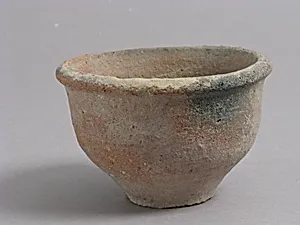
Bowl
Unknown Artist
4th–7th century
Medium
Earthenware
Dimensions
Overall: 2 7/16 x 3 11/16 in. (6.2 x 9.4 cm)
Classification
Ceramics
Culture
Coptic
Department
Medieval Art
Museum
Metropolitan Museum of Art, New York, NY
Credit
Rogers Fund, 1925
Accession Number
25.10.20.296
Rights
Public Domain
Tags
Art Historical Context
This modest earthenware bowl, crafted by an unknown Coptic artist between the 4th and 7th centuries, offers a glimpse into everyday life in early Christian Egypt. Measuring just 2 7/16 x 3 11/16 inches, it exemplifies the practical ceramics produced during the Coptic period—a time when Egypt transitioned from pharaonic traditions to Christian influences under Roman and Byzantine rule. Coptic culture, centered in monasteries and rural communities, blended ancient Egyptian motifs with emerging Christian, though this simple vessel focuses on functionality. Earthenware, fired at low temperatures from local Nile Valley clays, was a staple medium for Coptic potters. These bowls were essential for serving food, storing grains, or ritual use in domestic and monastic settings, highlighting the era's emphasis on humble, durable craftsmanship rather than ornate decoration. Its survival speaks to the resilience of Coptic material culture amid political upheavals, including Arab conquests by the 7th century. Acquired through the Rogers Fund in 1925 and now housed in the Metropolitan Museum of Art's Medieval Art department, this bowl invites us to appreciate the artistry in the ordinary—reminding visitors of the vibrant, faith-filled world of Coptic Egypt.