
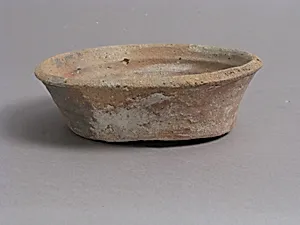
Bowl
Unknown Artist
4th–7th century
Medium
Earthenware
Dimensions
Overall: 1 7/8 x 5 7/8 in. (4.8 x 14.9 cm)
Classification
Ceramics
Culture
Coptic
Department
Medieval Art
Museum
Metropolitan Museum of Art, New York, NY
Credit
Rogers Fund, 1925
Accession Number
25.10.20.321
Rights
Public Domain
Tags
Art Historical Context
This delicate earthenware bowl, crafted by an unknown artist in Coptic Egypt between the 4th and 7th centuries, offers a glimpse into the daily life of early Christian communities along the Nile. Measuring just 1 7/8 x 5 7/8 inches, its modest size suggests it was used for serving food or holding small offerings, embodying the practical yet refined pottery traditions of the period. Acquired through the Rogers Fund in 1925, it now resides in the Metropolitan Museum Art's Medieval Art department highlighting the fusion of ancient Egyptian techniques with emerging Christian influences. Coptic culture, flourishing in Late Antique Egypt under Roman and Byzantine rule, produced ceramics like this bowl that bridged pagan and Christian worlds. Earthenware, fired at relatively low temperatures, was abundant and accessible, often wheel-thrown or hand-built for household use. Though undecorated in surviving form, such vessels reflect the era's artisanal skill and cultural resilience amid religious transformation. As a testament to Coptic ingenuity, this bowl underscores how everyday objects preserved artistic continuity from pharaonic times into the Christian age, inviting us to ponder the hands that shaped it over 1,500 years ago.