
Bowl
Unknown Artist
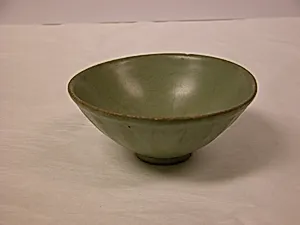
Medium
Pottery with blue-gray glaze
Dimensions
H. 2 3/4 in. (7 cm); Diam. 6.5 in. (16.5 cm)
Classification
Ceramics
Culture & Period
China · Qing dynasty (1644–1911)
Department
Asian Art
Museum
Metropolitan Museum of Art, New York, NY
Credit
Rogers Fund, 1921
Accession Number
21.104.1
Rights
Public Domain
Art Historical Context
This delicate Qing dynasty bowl, crafted in China during the 17th–19th centuries, exemplifies the era's mastery of ceramics. Measuring just 2¾ inches high and 6½ inches diameter, its petite form suggests it was likely used for tea, rice, or small offerings in daily life or rituals. The pottery's smooth blue-gray glaze—a subtle, monochromatic finish—creates a serene, misty elegance, evoking the natural hues of mist-shrouded mountains beloved in Chinese aesthetics. The Qing period marked a golden age for Chinese ceramics, with imperial kilns innovating glazes and forms for both domestic use and global export. This blue-gray tone may nod to the ancient celadon tradition, refined over centuries through high-temperature firing techniques that produced durable, vitreous surfaces resistant to cracking. Acquired by The Metropolitan Museum of Art via the Rogers Fund in 1921, it highlights how such everyday objects carried profound cultural value, symbolizing harmony and refinement in Confucian-influenced society. Though the artist remains unknown, this bowl invites visitors to appreciate the anonymous artisans whose skill fueled China's porcelain trade, influencing designs from Europe to Japan. A quiet treasure in our Asian Art collection, it whispers of imperial prosperity and timeless craftsmanship.