
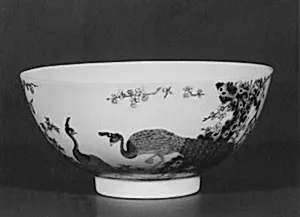
Bowl
Unknown Artist
early 19th century
Medium
Semi-eggshell porcelain with famille rose enamels
Dimensions
H. 2 1/4 in. (5.7 cm); Diam. 4 7/8 in. (12.4 cm)
Classification
Ceramics
Culture & Period
China · Qing dynasty (1644–1911)
Department
Asian Art
Museum
Metropolitan Museum of Art, New York, NY
Credit
Alfred W. Hoyt Collection, Bequest of Rosina H. Hoppin, 1965
Accession Number
65.86.61
Rights
Public Domain
Tags
Art Historical Context
This delicate semi-eggshell porcelain bowl crafted in China during the early 19th century under the Qing dynasty (164–1911), exemplifies pinnacle of imperial porcelain artistry. Measuring just 2¼ inches high and 4⅞ inches in diameter, its ultra-thin walls—translucent when held to light—demonstrate extraordinary technical mastery by anonymous potters at the Jingdezhen kilns. The medium features famille rose enamels, vibrant overglaze technique perfected in the 18th century, known for its soft pinks, greens, and golds applied in multiple firing stages for luminous depth and durability. Adorned with peacocks amid blooming flowers, the bowl's motifs carry rich symbolism: peacocks evoke beauty, dignity, and protection, while flowers like peonies or lotuses suggest prosperity and harmony. These designs, popular in export wares for European and Asian elites, blended Chinese aesthetics with global appeal, reflecting the Qing era's booming trade. Now in the Metropolitan Museum of Art's Asian Art collection (Alfred W. Hoyt Collection, Bequest of Rosina H. Hoppin, 1965), this bowl invites us to appreciate the fusion of utility and opulence in everyday luxury, a testament to China's enduring ceramic legacy.