
Bowl
Unknown Artist
Medium
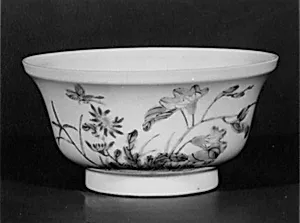
Semi-eggshell porcelain with famille rose enamels
Dimensions
H. 2 1/4 in. (5.7 cm); Diam. 4 1/2 in. (11.4 cm)
Classification
Ceramics
Culture & Period
China · Qing dynasty (1644–1911), Yongzheng mark and period (1723–35)
Department
Asian Art
Museum
Metropolitan Museum of Art, New York, NY
Credit
Alfred W. Hoyt Collection, Bequest of Rosina H. Hoppin, 1965
Accession Number
65.86.5
Rights
Public Domain
Tags
Art Historical Context
This delicate semi-eggshell porcelain bowl, bearing a Yongzheng mark from China's Qing dynasty (1723–35), exemplifies the pinnacle of porcelain craftsmanship. Measuring just 2¼ inches high and 4 inches in diameter, its extraordinarily thin walls—translucent when held to light—demonstrate the potters' mastery at the Jingdezhen kilns, where they balanced fragility with strength to create vessels as elegant as they were functional. Adorned with famille rose enamels, a vibrant overglaze technique introduced during the Yongzheng reign, the bowl likely features intricate floral motifs, blending traditional Chinese motifs with subtle European influences from Jesuit missionaries. The soft pinks, derived from colloidal gold, alongside greens and blues, allowed for unprecedented color depth and realism, marking a shift from earlier blue-and-white wares toward opulent, painterly decoration. In the refined aesthetic of the Yongzheng emperor, such bowls were prized for their understated luxury, used in scholarly tea rituals or palace banquets. Part of the Metropolitan Museum of Art's Asian Art collection, gifted through the Alfred W. Hoyt Collection in 1965, it invites us to appreciate how porcelain embodied China's cultural sophistication and technical innovation during a golden age of ceramics.