
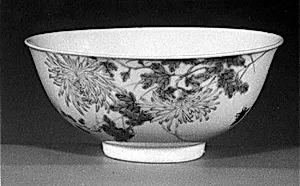
Bowl
Unknown Artist
early 19th century
Medium
Porcelain decorated with polychrome overglaze enamels
Dimensions
H. 2 1/2 in. (6.4 cm); Diam. 5 1/2 in. (14 cm)
Classification
Ceramics
Culture & Period
China · Qing dynasty (1644–1911)
Department
Asian Art
Museum
Metropolitan Museum of Art, New York, NY
Credit
Anonymous Gift, 1963
Accession Number
63.188.3
Rights
Public Domain
Tags
Art Historical Context
This delicate porcelain bowl, created in China during the early 19th century under the Qing dynasty, exemplifies the refined ceramic traditions that flourished during this era. Standing just 2½ inches tall with a 5½-inch diameter, it was crafted using the sophisticated technique of polychrome overglaze enamels, in which vibrant colors were applied and fired onto the glazed surface after the initial high-temperature firing. This method allowed artisans to achieve a rich palette of hues, bringing depth and liveliness to decorative motifs. The bowl’s surface features graceful floral and leaf designs, a popular theme in Chinese ceramics that celebrated nature’s beauty and harmony. During the Qing period, such pieces often served both functional and ornamental roles in daily life and scholarly settings, reflecting the dynasty’s emphasis on artistic excellence and technical innovation in porcelain production. Housed in the Metropolitan Museum of Art’s Asian Art collection, this anonymous work highlights the enduring appeal of Qing dynasty ceramics.