
Bowl
Unknown Artist
ca. 4400–3800 B.C.
Medium
Pottery
Classification
Bowl
Period
Predynastic, Badarian
Department
Egyptian Art
Museum
Metropolitan Museum of Art, New York, NY
Credit
Rogers Fund, 1932
Accession Number
32.2.43
Rights
Public Domain
Art Historical Context
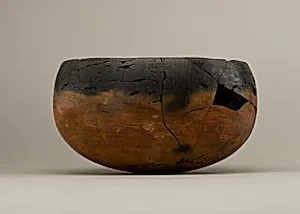
This simple yet elegant bowl hails from Egypt's Predynastic Period specifically the Badarian cultureca. 4400–3800 B.C.), one of the earliest known phases of settled life in Upper Egypt. Dating back over 6,000 years, it offers a glimpse into a time before the pyramids and pharaohs, when communities along the Nile were transitioning from nomadic hunting to farming and crafting. Discovered and acquired through the Rogers Fund in 1932, it now resides in the Metropolitan Museum Art's Egyptian Art collectionCrafted from pottery—a medium that revolutionized daily life in ancient Egypt—this hand-formed vessel exemplifies Badarian ingenuity. Artisans likely shaped it from Nile silt, burnished the surface for a smooth sheen, and fired it in open pits, achieving durable, thin walls. Badarian pottery is renowned for its technical finesse, often featuring a distinctive black-topped red polish that hints at controlled firing techniques to create color contrasts through oxidation and reduction. Culturally, such bowls were essential for storing grain, serving food, or use in rituals, reflecting a society's growing sophistication in agriculture and communal living. Buried with the dead, they underscore beliefs in the afterlife, bridging the mundane and the eternal in Egypt's formative years. A quiet testament to human creativity, this bowl invites us to ponder the roots of one of history's greatest civilizations.