
莫臥兒王朝 鑲金嵌寶玉碗|Bowl
Unknown Artist
18th–19th century
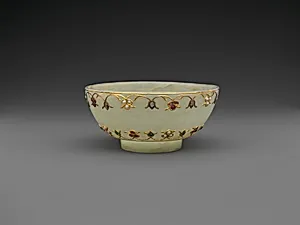
Medium
Jade (nephrite) with gold and semiprecious stone inlays
Dimensions
H. 1 7/8 in. (4.8 cm); Diam. 4 1/16 in. (10.3 cm)
Classification
Jade
Culture & Period
India · Mughal period (1526–1858)
Department
Asian Art
Museum
Metropolitan Museum of Art, New York, NY
Credit
Gift of Heber R. Bishop, 1902
Accession Number
02.18.772
Rights
Public Domain
Art Historical Context
This exquisite jade bowl, crafted during the later Mughal period in India, exemplifies the refined luxury arts patronized by emperors and nobility from the 16th to 19th centuries. Originating in a cultural milieu shaped by Persian, Central Asian, and indigenous Indian traditions, such vessels were often created for imperial use or as diplomatic gifts. The small scale—standing just under two inches high—suggests it served as a personal drinking cup or ornamental object, highlighting the Mughals’ appreciation for intimate, tactile works of art. The bowl is fashioned from nephrite jade, a stone prized for its cool smoothness and symbolic associations with purity and protection. Artisans employed sophisticated inlay techniques, setting delicate gold mounts with semiprecious stones to create intricate floral or geometric patterns. This combination of hardstone carving and jewel-like embellishment reflects the high level of technical mastery achieved in Mughal workshops, where jade objects were valued alongside miniature paintings and textiles as markers of refined taste. Acquired by the Metropolitan Museum in 1902 as part of the Heber R. Bishop collection, the bowl offers visitors a tangible connection to India’s rich artistic heritage and the enduring appeal of Mughal design.