
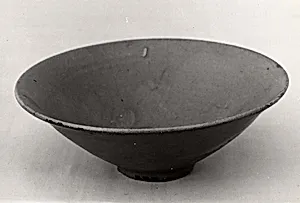
Bowl
Unknown Artist
early 12th century
Medium
Stoneware with mold-relief decoration under celadon glaze
Dimensions
H. 2 1/4 in. (5.7 cm); Diam. 6 1/4 in. (15.9 cm)
Classification
Ceramics
Culture & Period
Korea · Goryeo dynasty (918–1392)
Department
Asian Art
Museum
Metropolitan Museum of Art, New York, NY
Credit
Gift of Samuel T. Peters, 1915
Accession Number
15.29.26
Rights
Public Domain
Art Historical Context
This elegant stoneware bowl, crafted in Korea during the early 12th century under the Goryeo dynasty918–1392), exemplifies the pinnacle of Korean ceramic artistry. Small yet perfectly proportioned—standing just 2¼ inches high and 6¼ inches in diameter—it was likely used for everyday rituals or elite dining, reflecting the dynasty's refined aesthetic and Buddhist-influenced culture. Goryeo potters achieved international renown for their celadon wares, which were exported across Asia, symbolizing Korea's technological and artistic prowess. The bowl's standout feature is its mold-relief decoration beneath a signature celadon glaze, a jade-green finish prized for its subtle luster and crackle patterns. Artisans pressed intricate designs into the stoneware body using molds before applying the glaze and firing at high temperatures, creating raised motifs that catch the light beautifully. This technique highlighted Goryeo's mastery of subtle elegance over bold ornamentation, distinguishing it from contemporary Chinese porcelains. Today, this gift to the Metropolitan Museum of Art from Samuel T. Peters in 1915 invites us to appreciate the quiet sophistication of Goryeo ceramics, a testament to a golden age of Korean innovation.