
Bowl
Unknown Artist
18th century
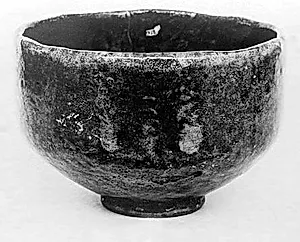
Medium
Crackled and spotted Raku (Raku ware)
Dimensions
Diam. 5 in. (12.7 cm)
Classification
Ceramics
Culture & Period
Japan · Edo period (1615–1868)
Department
Asian Art
Museum
Metropolitan Museum of Art, New York, NY
Credit
Edward C. Moore Collection, Bequest of Edward C. Moore, 1891
Accession Number
91.1.362
Rights
Public Domain
Art Historical Context
This exquisite 18th-century Raku ware bowl, measuring just 5 inches in diameter, exemplifies the rustic elegance of Japanese ceramics from the Edo period (1615–1868). Crafted by an unknown artist, its crackled and spotted glaze—hallmarks of Raku technique—creates a textured, organic surface that invites touch and contemplation. Low-fired in an open kiln, Raku pieces like this were hand-formed without a wheel, embracing asymmetry and imperfection in the spirit of *wabi-sabi*, the aesthetic of humble beauty. Raku ware originated in Kyoto in the late 16th century for the tea ceremony (*chanoyu*), where such bowls held matcha, their irregular forms enhancing the ritual's intimacy and mindfulness. By the Edo era, a time of cultural refinement and urban prosperity, Raku evolved into a revered tradition, with families like the Raku lineage perfecting these effects through smoke-firing and natural ash glazes that produce unique crackles and spots on each vessel. Part of the Metropolitan Museum of Art's Edward C. Moore Collection (bequest of 1891), this bowl transports visitors to Japan's tea houses, where simplicity met profound artistry. Pause to admire how its modest scale belies a deep cultural legacy.