
Bowl
Unknown Artist
1820
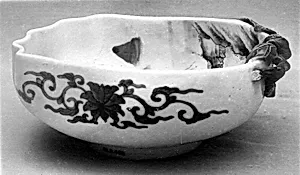
Medium
White porcelain decorated with blue under the glaze (Kameyama ware)
Dimensions
H. 3 1/4 in. (8.3 cm); W. 6 1/4 in. (15.9 cm); L. 7 1/2 in. (19.1 cm)
Classification
Ceramics
Culture & Period
Japan · Edo period (1615–1868)
Department
Asian Art
Museum
Metropolitan Museum of Art, New York, NY
Credit
Gift of Charles Stewart Smith, 1893
Accession Number
93.3.453
Rights
Public Domain
Art Historical Context
This elegant bowl, crafted in 1820 during Japan's Edo period (1615–8), exemplifies Kameyama ware—a regional porcelain style from the Kameyamans in present-day Mie Prefecture. Made of fine white porcelain decorated with cobalt blue under the glaze, features the durable technique of underglaze painting, where designs are applied to the unfired clay before a transparent glaze seals them during firing. This method, inspired by Chinese blue-and-white porcelain but adapted with Japanese subtlety, ensured vibrant, lasting colors resistant to wear—ideal for everyday use in tea ceremonies or dining. Measuring just 3¼ inches high and up to 7½ inches long, the oval-shaped bowl reflects the Edo era's emphasis on functional beauty amid a booming ceramics industry. Peaceful prosperity fueled mass production for domestic markets and export, blending utility with understated elegance. Donated to the Metropolitan Museum of Art in 1893 by Charles Stewart Smith, this piece offers a glimpse into late Edo craftsmanship, highlighting Japan's mastery of porcelain that rivaled global traditions while serving the rising merchant class's refined tastes.