
Bowl
1803–67
Medium
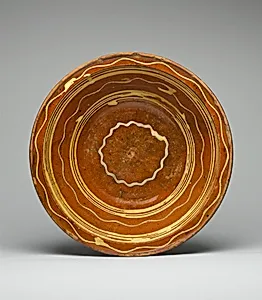
Earthenware; Redware with slip decoration
Dimensions
H. 3 5/8 in. (9.2 cm); Diam. 12 7/8 in. (32.7 cm)
Classification
Bowl
Culture
American
Department
The American Wing
Museum
Metropolitan Museum of Art, New York, NY
Credit
Gift of Robert Macauley Jackson, 1920
Accession Number
20.109.11
Rights
Public Domain
Art Historical Context
This charming redware bowl, crafted by American potter Hervey Brooks between 1803 and 1867, exemplifies the practical yet decorative pottery traditions of early nineteenth-century America. Made from earthenware clay, the vessel features slip decoration—a technique in which liquid clay is applied to the surface to create contrasting patterns before firing. Its modest size and wide, shallow form suggest it was designed for everyday use, perhaps for serving food or mixing ingredients in a rural household. Redware pottery like this piece played an important role in American domestic life during the period, offering an affordable alternative to imported ceramics. Brooks worked in a folk tradition that blended utility with simple ornamentation, often drawing on local materials and techniques passed down through generations of potters. The warm, earthy tones of the red clay body, enhanced by slip designs, reflect the resourceful spirit of American artisans who transformed humble materials into objects of quiet beauty. Now part of the Metropolitan Museum’s American Wing, this bowl offers visitors a glimpse into the material culture of the young nation. Its presence in the collection highlights how everyday objects from the early republic continue to tell stories of craftsmanship, regional identity, and the enduring appeal of handmade wares.