
Bowl
Unknown Artist
after 1885
Medium
Blown satin blue glass
Dimensions
H. 3 1/4 in. (8.3 cm); Diam. 9 3/8 in. (23.8 cm)
Classification
Bowl
Culture
American or British
Department
The American Wing
Museum
Metropolitan Museum of Art, New York, NY
Credit
Gift of Mrs. Emily Winthrop Miles, 1946
Accession Number
46.140.206
Rights
Public Domain
Art Historical Context
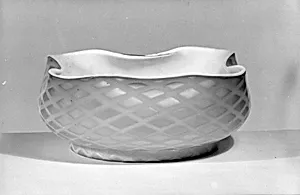
This elegant satin glass bowl, created by an unknown artist after 5, exemplifies the refined decorative arts of the late 19th century. Measuring just 3¼ inches high and 9⅜ inches in diameter, its shallow, wide form suggests it served as an ornamental centerpiece or fruit dish. The striking satin blue hue comes from a specialized technique: the glass was first hand-blown into shape, then treated with hydrofluoric acid to create soft, frosted "satin" finish. This matte texture diffuses light beautifully, lending the bowl a velvety glow that was highly prized in Victorian-era households. Likely produced in America or Britain—reflected in its home in The Met's American Wing—satin glass surged in popularity during the Aesthetic Movement of the 1880s and 1890s. Makers on both sides of the Atlantic experimented with opalescent and frosted effects, blending industrial precision with artistic flair. Blue tones, like this one, evoked the sea or twilight skies, adding poetic appeal to everyday luxury. Generously donated to the Metropolitan Museum of Art in 1946 by Mrs. Emily Winthrop Miles, this bowl offers a glimpse into Gilded Age tastes, where beauty elevated the ordinary. Visitors can appreciate how such pieces bridged art and domestic life, showcasing glassmakers' mastery of color and texture.