
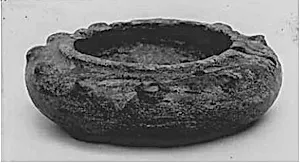
Bowl
Unknown Artist
7th century
Medium
Volcanic ash
Dimensions
H. 1 1/2 in. (3.8 cm); Diam. 4 5/8 in. (11.7 cm)
Classification
Stone
Culture & Period
Japan · Kofun period (ca. 300–710)
Department
Asian Art
Museum
Metropolitan Museum of Art, New York, NY
Credit
Rogers Fund, 1912
Accession Number
12.37.171
Rights
Public Domain
Art Historical Context
This delicate bowl, crafted in 7th-century Japan during the Kofun period (ca. 300–710), exemplifies early stoneware technology in East Asia. Measuring just 1 1/2 inches high 4 5/8 inches in diameter it was fashioned from volcanic ash—a key ingredient in the clay body that enabled high-temperature firing, producing a durable, vitrified surface without glaze. This medium, characteristic of Sueki ware, reflects innovative adaptations to Japan's volcanic landscape, yielding sturdy vessels prized for both utility and ritual use. The Kofun era, named for its massive keyhole-shaped burial mounds, marked Japan's transition toward a centralized Yamato state with growing continental influences from Korea and China. Elite artifacts like this bowl often accompanied the deceased in tombs, symbolizing status and spiritual beliefs blending indigenous animism with emerging Buddhist ideas. Its simple, elegant form highlights the period's restrained aesthetic, prioritizing function and subtle beauty over ornamentation. Housed in the Metropolitan Museum of Art's Asian Art Department (Rogers Fund, 1912), this anonymous masterpiece offers a window into ancient Japanese craftsmanship, reminding us how everyday objects embodied profound cultural continuity.