
Bowl and Cover
ca. 1850
Medium
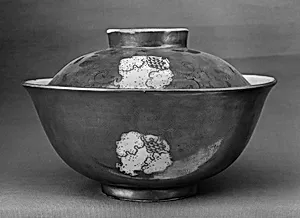
White porcelain covered with gold (Kairakuen ware)
Dimensions
H. 4 1/2 in. (11.4 cm); W. 7 in. (17.8 cm)
Classification
Ceramics
Culture & Period
Japan · Edo period (1615–1868)
Department
Asian Art
Museum
Metropolitan Museum of Art, New York, NY
Credit
Purchase by subscription, 1879
Accession Number
79.2.955a, b
Rights
Public Domain
Art Historical Context
This exquisite Bowl and Cover, created around 1850 by the Japanese artist Nanki Otokoyama, exemplifies the refined elegance of Kairakuen ware during Japan’s Edo period (1615–1868). Produced in a time of relative peace and cultural flourishing, the piece reflects the era’s appreciation for luxurious yet understated objects intended for tea ceremonies or scholarly gatherings. Its compact form—standing just 4½ inches high and 7 inches wide—makes it both functional and decorative, highlighting the careful balance between utility and beauty prized in Japanese ceramics. Crafted from luminous white porcelain and lavishly covered in gold, the bowl demonstrates the technical mastery of Kairakuen ware, a style known for its radiant surfaces and delicate application of precious materials. The gold embellishment not only enhances the vessel’s visual warmth but also signifies status and refinement, as such opulent finishes were often reserved for elite patrons. Acquired by the Metropolitan Museum of Art in 1879 through public subscription, this work offers visitors a tangible connection to mid-nineteenth-century Japanese artistry and the global fascination with Asian ceramics that emerged during that era.