
Bowl, Fluted
Unknown Artist
10th century
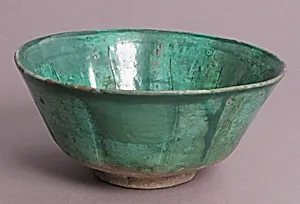
Medium
Earthenware, glazed
Dimensions
Overall: 3 3/16 x 6 3/4 in. (8.1 x 17.2 cm)
Classification
Ceramics
Culture
Byzantine
Department
Medieval Art
Museum
Metropolitan Museum of Art, New York, NY
Credit
The Milton A. Rauh and Florence L. Goldmark Collection, Bequest of Florence L. Goldmark, 1974
Accession Number
1974.346
Rights
Public Domain
Art Historical Context
This delicate fluted bowl, crafted in the 10th century by an unknown Byzantine artisan, exemplifies the refined ceramics of the Eastern Roman Empire. Made from glazed earthenware, it measures just 3 3/16 x 6 3/4 inches (8.1 x 17.2 cm), making it a practical yet elegant vessel for daily use—perhaps holding spices, fruits, or olives in a bustling Byzantine household. The fluted design, with its subtle vertical ridges, adds a rhythmic texture that catches the light, enhancing its visual appeal. Byzantine potters mastered glazing techniques during this medieval period, applying lead-based glazes over earthenware bodies fired at high temperatures. This process created a smooth, shiny surface that was both waterproof and decorative, reflecting the empire's advanced ceramic traditions influenced by earlier Hellenistic and Islamic methods. Such bowls were produced in workshops across Constantinople and its provinces, symbolizing the blend of utility and artistry in everyday life. Housed in the Metropolitan Museum of Art's Medieval Art Department (The Milton A. Rauh and Florence L. Goldmark Collection, Bequest of Florence L. Goldmark, 1974), this piece offers a glimpse into Byzantine material culture, where even humble objects showcased technical prowess and aesthetic sensibility, bridging the classical world and the Middle Ages.