
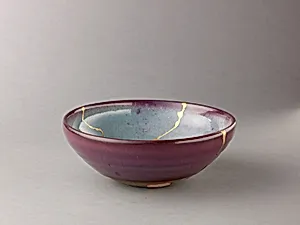
Bowl, possibly a copy of Jun ware
Unknown Artist
possibly 13th century
Medium
Stoneware with blue and purple glazes.
Dimensions
Diamerter: 7 1/4 in. (18.4cm)
Classification
Ceramics
Culture
possibly Chinese
Department
Robert Lehman Collection
Museum
Metropolitan Museum of Art, New York, NY
Credit
Robert Lehman Collection, 1975
Accession Number
1975.1.1653
Rights
Public Domain
Art Historical Context
This elegant stoneware bowl, measuring 7¼ inches (18.4 cm) in diameter,ails from the Robert Lehman Collection at Metropolitan Museum of Art.orned with vibrant blue and purple glazes it is classified as a possible 13th-century copy of renowned Jun ware—a testament to the enduring allure of Chinese ceramic artistry. Acquired in 1975, this piece invites visitors to ponder its mysterious origins, blending the anonymous craft of an unknown artist with the sophisticated techniques of its inspiration. Jun ware, originating from kilns in China's Henan province during the Song and Jin dynasties (roughly 10th–14th centuries), is celebrated for its mesmerizing glazes. Artisans layered thick, ash-based slips rich in iron and copper oxides, firing them at high temperatures in wood-fired kilns. This process yielded the glazes' signature opalescent blues, purples, and subtle crackle patterns, evoking sky, clouds, or ocean depths—qualities prized by emperors and collectors alike. Copies like this one highlight how such innovations inspired imitation across time and cultures. Though its exact provenance remains elusive, this bowl exemplifies the cultural prestige of Chinese stoneware, bridging ancient imperial tastes with modern museum appreciation. Gaze closely at the glaze's fluid pooling, and you'll sense the kiln's alchemy at work—a window into a world where clay met fire to create timeless beauty.