
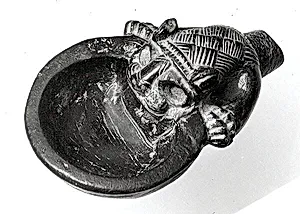
Bowl with a handle in the form of the forepart of a lion
Unknown Artist
ca. 8th century BCE
Medium
Chlorite
Dimensions
1.97 x 2.6 x 4.61 in. (5 x 6.6 x 11.71 cm)
Classification
Stone-Vessels
Period
Iron Age II
Department
Ancient Near Eastern Art
Museum
Metropolitan Museum of Art, New York, NY
Credit
Anonymous Gift, 1961
Accession Number
61.98
Rights
Public Domain
Tags
Art Historical Context
This exquisite chlorite stone bowl, dating to around the 8th century BCE during Iron Age II, hails from the Ancient Near East—a cradle of early civilizations like those in Mesopotamia and Iran. Measuring just under 5 inches long, its petite size belies its craftsmanship: a functional vessel topped with a handle sculpted as the powerful forepart of a lion complete with a snarling muzzle and muscular form. Such stone vessels were prized luxury items, often used for rituals, oils, or elite dining, showcasing the era's advanced stone-carving skills. Chlorite, a soft yet durable gray-green stone sourced from distant mountains, allowed artisans to incise fine details, making it ideal for intricate designs. The lion motif, a recurring symbol of strength, royalty, and divine protection across Near Eastern cultures—from Assyrian palaces to Luristan bronzes—elevates this bowl from mere utility to emblem of power. Lions guarded thresholds and deities, their fierce presence warding off evil. Today, this anonymous 1961 gift to the Metropolitan Museum of Art invites us to ponder the daily lives of Iron Age elites, bridging 3,000 years to touch ancient hands. A testament to enduring artistry! (198 words)