
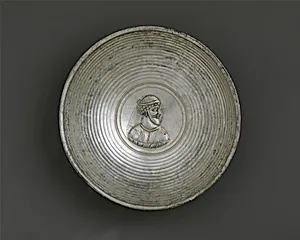
Bowl with a male bust within a medallion
Unknown Artist
ca. early 4th century CE
Medium
Silver
Dimensions
Diam. 23.3-23.6 H. 7.2 Thickness at rim: 0.44-0.56 Weight 597g
Classification
Metalwork-Vessels
Culture & Period
Sasanian · Sasanian
Department
Ancient Near Eastern Art
Museum
Metropolitan Museum of Art, New York, NY
Credit
Harris Brisbane Dick Fund, 1955
Accession Number
55.57
Rights
Public Domain
Tags
Art Historical Context
This exquisite silver bowl, dating to the early 4th century CE, hails from the Sasanian Empire, a of ancient Persia that flourished from 224 to 651 CE. Crafted by an unknown artist, it measures about 23.5 cm in diameter and weighs substantial 597 grams, thin rim (0.44-0.56 cm thick) showcasing the advanced metalworking skills of the era. Adorning the interior is a striking male bust framed within a medallion, rendered in profile—a motif echoing Hellenistic influences blended with Sasanian grandeur. Sasanian silver vessels like this one were more than practical tableware; they symbolized wealth, power, and royal patronage, often used in elite banquets or as diplomatic gifts. The profile portrait likely depicts a king, noble, or idealized hero, embodying the empire's sophisticated iconography that celebrated rulers and their divine right. Such bowls, produced in royal workshops, were prized across Eurasia and frequently buried in hoards for safekeeping. Today, this masterpiece resides in the Metropolitan Museum of Art's Department of Ancient Near Eastern Art, acquired through the Harris Brisbane Dick Fund in 1955. It offers a tantalizing glimpse into Sasanian artistry, where form met function in gleaming silver, bridging daily life and imperial splendor.