
Bowl with cover
late 18th century
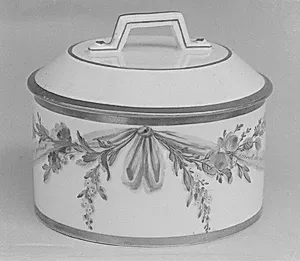
Medium
Hard-paste porcelain
Dimensions
Height: 3 3/8 in. (8.6 cm)
Classification
Ceramics-Porcelain
Culture
German, Thuringia (Gotha)
Department
European Sculpture and Decorative Arts
Museum
Metropolitan Museum of Art, New York, NY
Credit
The George B. McClellan Collection, Gift of Mrs. George B. McClellan, 1941
Accession Number
42.205.240a, b
Rights
Public Domain
Art Historical Context
This delicate **Bowl with Cover** from the Gotha porcelain manufactory in Thuring, Germany, exemplifies the refined craftsmanship of late 18th European ceramics. Standing just 3 3/8 (8.6 cm tall, this petite hardaste porcelain vessel was designed for intimate table service or display, reflecting the's fascination with luxurious domestic inspired by Chinese imports. Hard-paste porcelain a technical triumph pioneered by Meissen in the early 1700s and widely adopted across Germany, allowed for thin, translucent bodies fired at high temperatures—stronger and more brilliant than softer varieties. Gotha, one of Thuringia's many innovative factories, competed in this vibrant industry, producing affordable yet elegant wares amid the region's "porcelain fever." By the late 1700s, such pieces graced bourgeois homes, symbolizing taste and prosperity during the Enlightenment. Now part of The Metropolitan Museum of Art's European Sculpture and Decorative Arts collection—thanks to the George B. McClellan Collection, gifted in 1941—this bowl invites us to appreciate the artistry of everyday luxury, where technical mastery met cultural aspiration.