
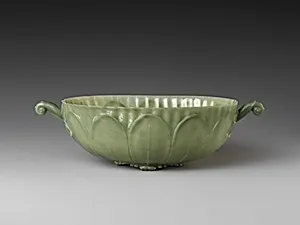
土耳其奧斯曼時期 玉雕花形碗|Bowl with floral design
Unknown Artist
18th century
Medium
Jade (nephrite)
Dimensions
L. 9 13/16 in. (25 cm)
Classification
Jade
Culture & Period
Turkey · Ottoman period (1299–1923)
Department
Asian Art
Museum
Metropolitan Museum of Art, New York, NY
Credit
Gift of Florence and Herbert Irving, 2015
Accession Number
2015.500.5.50
Rights
Public Domain
Art Historical Context
This exquisite jade bowl, carved in the shape of a flower during Turkey's Ottoman period in the 18th century showcases the empire's mastery of luxury craftsmanship. Fashioned from nephrite jade—a tough, translucent green stone prized for its durability and lustrous polish—the bowl measures nearly 10 inches (25 cm) in length. Its floral form and intricate surface designs evoke the opulent decorative arts of the Ottoman court, where such objects symbolized refinement and abundance. In the Ottoman Empire (1299–1923), jade carving blended influences from Persian, Chinese, and Central Asian traditions, often reserved for elite patrons. Nephrite, sourced from distant quarries, was laboriously hollowed and sculpted using specialized tools, highlighting the technical prowess of anonymous artisans. Floral motifs like those here were ubiquitous in Islamic art, representing paradise gardens and eternal beauty, while the bowl's vessel form suggests use in ceremonial settings or as a display piece for spices, confections, or jewels. Today, this rare survivor graces the Metropolitan Museum of Art's Asian Art department, a gift from Florence and Herbert Irving in 2015. It invites us to marvel at the Ottoman legacy of transcultural artistry, bridging East and West in a single, shimmering bloom.