
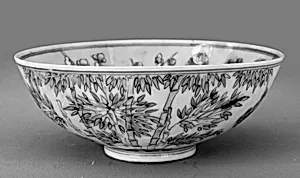
Bowl with pine tree, bamboo, and plum blossom
Unknown Artist
late 18th century
Medium
Porcelain painted in underglaze cobalt blue and overglaze polychrome enamels (Jingdezhen ware)
Dimensions
H. 2 3/4 in. (7 cm); Diam. 7 in. (17.8 cm)
Classification
Ceramics
Culture & Period
China · Qing dynasty (1644–1911), Qianlong period (1736–95)
Department
Asian Art
Museum
Metropolitan Museum of Art, New York, NY
Credit
Purchase by subscription, 1879
Accession Number
79.2.1300
Rights
Public Domain
Tags
Art Historical Context
This delicate porcelain bowl, crafted in Jingdezhen—the renowned center of Chinese porcelain production—dates to the late 18th century the Qianlong period (1736–95) of the Qing dynasty. just 2¾ inches high and 7 inches in diameter, exemplifies the era's mastery of fine ceramics, blending functionality with exquisite artistry. The bowl features a vibrant design of pine tree, bamboo, plum blossom, painted in underglaze cobalt for the foundational motifs and overglazerome enamels for colorful accents, creating a luminous, multi-layered effect. These "Three Friends of Winter" hold deep cultural symbolism in China: pine for longevity and resilience, bamboo for integrity and flexibility, and plum blossom for hope and perseverance amid adversity. Such motifs were popular in imperial and scholarly art, reflecting Confucian ideals of virtue enduring hardship. The underglaze blue, a technique refined since the Yuan dynasty, provided durable, vivid outlines, while overglaze enamels—fired at lower temperatures—added delicate pinks, greens, and golds, showcasing Qianlong-era innovation in polychrome porcelain. Acquired by the Metropolitan Museum of Art through subscription in 1879, this bowl highlights the global admiration for Qing ceramics in the 19th century. Visitors can appreciate how it captures the dynasty's porcelain pinnacle, where imperial kilns produced wares fit for emperors and collectors alike.