
Box
Unknown Artist
1806–7
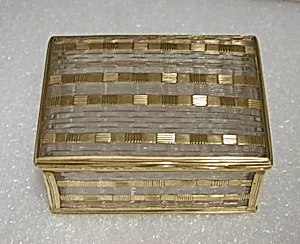
Medium
Gold and glass
Dimensions
1 1/2 × 2 7/8 × 2 1/8 in. (3.8 × 7.3 × 5.4 cm)
Classification
Metalwork-Gold and Platinum
Culture
Austrian, Vienna
Department
European Sculpture and Decorative Arts
Museum
Metropolitan Museum of Art, New York, NY
Credit
Bequest of Kate Read Blacque, in memory of her husband, Valentine Alexander Blacque, 1937
Accession Number
38.50.5
Rights
Public Domain
Art Historical Context
This exquisite little box, crafted in Vienna around 1806–7, exemplifies the refined goldsmithing traditions of the Austrian Empire during theonic era. Measuring just 1 1/2 × 2 7/8 × 2 1/8, it was likely designed as a luxury personal accessory—perhaps a snuffbox or etui for holding small valuables—reflecting the era's taste for intimate, portable elegance amid political upheaval and imperial grandeur. Made of gold with delicate glass elements, the box highlights advanced metalworking techniques such as chasing, engraving, or repoussé, common in Viennese workshops. The integration of glass suggests possible painted or jeweled insets, adding translucency and sparkle to the gleaming gold surface. Vienna was a hub for such high-end decorative arts, where artisans drew from neoclassical and emerging Empire styles influenced by French design. Today, housed in the Metropolitan Museum of Art's Department of European Sculpture and Decorative Arts, this piece entered the collection through the 1937 bequest of Kate Read Blacque in memory of her husband, Valentine Alexander Blacque. It offers a glimpse into the opulent private world of early 19th-century elites, where even the smallest objects embodied masterful craftsmanship and cultural prestige.