
Box
Unknown Artist
late 16th–early 17th century
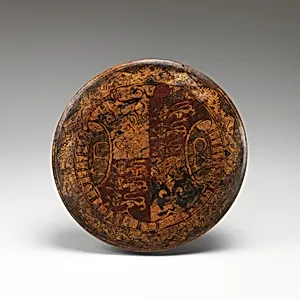
Medium
Oak and sycamore woods, painted, silvered and yellow varnished
Dimensions
Diameter: 6 1/2 in. (16.5 cm)
Classification
Natural Substances
Culture
British
Department
European Sculpture and Decorative Arts
Museum
Metropolitan Museum of Art, New York, NY
Credit
Gift of Irwin Untermyer, 1964
Accession Number
64.101.1578a, b
Rights
Public Domain
Art Historical Context
This exquisite little box, crafted in Britain during the late 16th to early 17th century offers a glimpse into the refined world of Jacobean decorative arts. Measuring just 6½ inches in diameter, it's a compact marvel made from oak and syc woods—staple materials in English craftsmanship of the era, prized for their durability and fine grain. Likely used to store precious items like jewelry or spices, such boxes were status symbols for the emerging merchant class amid England's Renaissance flowering. The artistry shines in its surface treatments: meticulously painted, silvered, and coated with a glossy yellow varnish. These techniques mimicked costly metals and enamels, elevating humble wood into luxurious finery. Silvering involved applying thin metal leaf for a shimmering effect, while the varnish protected and enhanced the vibrant hues, showcasing the period's innovative decorative flair influenced by continental styles like those from the Low Countries. Now housed in the Metropolitan Museum of Art's European Sculpture and Decorative Arts Department—thanks to a 1964 gift from Irwin Untermyer—this anonymous treasure highlights everyday elegance from a time of Tudor-to-Stuart transition, inviting us to appreciate the unsung skill of forgotten makers.