
Box
late 18th century; miniature ca. 1790
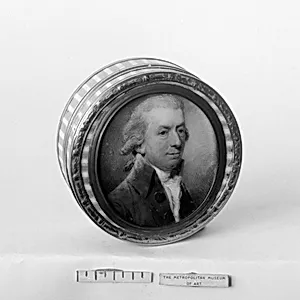
Medium
Gold, vernis Martin, ivory, silver, tortoiseshell
Classification
Metalwork-Gold and Platinum|Miniatures
Culture
probably French box with British miniature
Department
European Sculpture and Decorative Arts
Museum
Metropolitan Museum of Art, New York, NY
Credit
The Moses Lazarus Collection, Gift of Josephine and Sarah Lazarus, in memory of their father, 1888-95
Accession Number
95.14.8
Rights
Public Domain
Tags
Art Historical Context
This exquisite gold box, crafted in the late 18th century with a miniature portrait dated around 1790, exemplifies the opulent decorative arts of the Enlightenment era. Attributed to miniaturist Charles Jagger for the portrait, it features a finely painted depiction of George Washington on ivory, set within a lavish frame of silver, tortoiseshell, and vernis Martin—a glossy, translucent lacquer technique pioneered by the Martin brothers in France, known for its vibrant, enamel-like sheen imitating Oriental lacquerware. The box's hybrid nature—a probable French body paired with a British miniature—highlights the cosmopolitan exchange of luxury goods across Europe during this period. Housing Washington's stern yet dignified profile, the piece captures the revolutionary fervor of the age. As the first U.S. President (1789–1797), Washington symbolized emerging American ideals of liberty, making his portrait a coveted emblem for admirers in Europe and Britain. Miniatures like this were intimate treasures, often worn as jewelry or carried in pockets, blending portraiture's personal sentiment with metalwork's technical virtuosity. Part of the Metropolitan Museum of Art's European Sculpture and Decorative Arts collection, gifted from the Moses Lazarus Collection in 1888–95, this "Box" invites visitors to ponder the global ripples of the American Revolution through exquisite craftsmanship.