
Box
Unknown Artist
1680–1700
Medium
White oak, maple
Dimensions
9 x 29 1/2 x 17 1/4 in. (22.9 x 74.9 x 43.8 cm)
Classification
Box
Culture
American
Department
The American Wing
Museum
Metropolitan Museum of Art, New York, NY
Credit
Gift of Mrs. Russell Sage, 1909
Accession Number
10.125.684
Rights
Public Domain
Art Historical Context
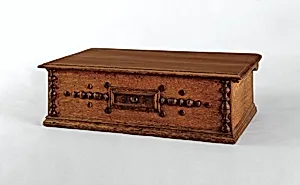
Nestled in the Metropolitan Museum of Art's American Wing, this unassuming yet elegant wooden box, crafted from white oak and between 1680 and1700, offers a window into early colonial American life. Measuring 9 x 29½ x 17¼ inches, its sturdy rectangular form was likely designed for practical storage—perhaps safeguarding household linens, documents, or valuables in a frontier home. The choice of native woods reflects the resourcefulness of colonial craftsmen: durable white oak for strength and beautifully grained maple for decorative elements, joined with precise mortise-and-tenon techniques honed by European-trained artisans adapting to New World materials. Though the maker remains unknown, this box exemplifies vernacular American woodworking from the late 17th century, a time when Puritan settlers in New England prioritized function over ornamentation. Such pieces were essential in sparse households, embodying the self-reliant spirit of the era. Its survival and generous donation by Mrs. Russell Sage in 1909 highlight its value as a tangible link to America's founding craftsmanship. Today, it invites visitors to appreciate the quiet artistry of everyday objects, reminding us how simple forms carried profound cultural weight in shaping early American identity.