
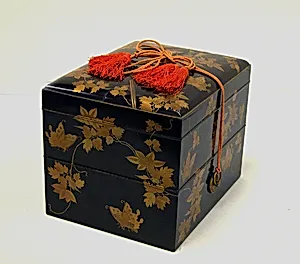
Box and utensils for incense ceremony set
Unknown Artist
19th century
Medium
Black lacquer decorated with sprinkled lacquer; clematis and butterfly folded incense paper design
Dimensions
H. 8 1/2 in. (21.6 cm); W. 10 3/8 in. (26.4 cm); L. 8 1/4 in. (21 cm)
Classification
Lacquer
Culture & Period
Japan · Edo period (1615–1868)
Department
Asian Art
Museum
Metropolitan Museum of Art, New York, NY
Credit
The Howard Mansfield Collection, Purchase, Rogers Fund, 1936
Accession Number
36.100.149a–s
Rights
Public Domain
Tags
Art Historical Context
This exquisite black lacquer box and utensils set, crafted in Japan during the late Edo period (1615–1868), served as essential tools for *kōdō*, the refined art of incense appreciation. Rooted in Zen Buddhist traditions and paralleling the tea ceremony, *kōdō* emphasized sensory mindfulness and social elegance among samurai and merchants. Produced in the 19th century, this set reflects the era's peak in lacquer craftsmanship, when everyday rituals became venues for artistic display. The box, measuring about 8½ by 10⅜ by 8¼ inches, features a glossy black *roiro* lacquer base adorned with sprinkled lacquer (*makie*-style technique), where powdered gold or shell is sifted and layered for subtle shimmer. Delicate motifs of clematis flowers, butterflies, and folded incense papers evoke fleeting beauty—butterflies symbolizing transformation, their wings amid twining vines and leaves capturing nature's ephemerality. This intricate *urushi* work demanded masterful skill, as layers of sap-derived lacquer were applied, polished, and decorated over months. Housed in the Metropolitan Museum of Art's Asian Art Department (from The Howard Mansfield Collection, 1936), this piece highlights Edo Japan's fusion of utility and poetry, inviting visitors to ponder how scent, scent, and surface could elevate the senses.