
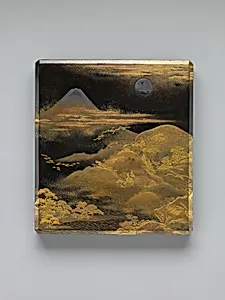
富士飛雁蒔絵硯箱|Box for Inkstone and Writing Implements (Suzuribako) with Geese against Mount Fuji in Moonlight and (inner lid) with Plovers by the Seashore
Unknown Artist
early to mid-19th century
Medium
Black lacquer ground with gold and silver maki-e
Dimensions
H. 9 9/16 in. (24.3 cm); W. 8 5/8 in. (21.9 cm); D. 1 13/16 in. (4.6 cm)
Classification
Lacquer
Culture & Period
Japan · Edo period (1615–1868)
Department
Asian Art
Museum
Metropolitan Museum of Art, New York, NY
Credit
Bequest of Stephen Whitney Phoenix, 1881
Accession Number
81.1.153a–f
Rights
Public Domain
Tags
Art Historical Context
This exquisite *Suzuribako*—a lacquered box for inkstones and writing implements—hails from Japan's Edo period (1615–1868), a time of relative peace and cultural flourishing when lacquerware became a pinnacle of artisanal luxury. Crafted in the early to mid-th century by an unknown master, its compact form (H. 9 9/16 in.; W. 8 5/8 in.; D. 1 13/16 in.) was designed for portability, essential for traveling scholars, poets, and who prized calligraphy as both art and virtue. The box's black lacquer ground shimmers with intricate gold and silver *maki-e* designs, a revered technique where powdered metals are sprinkled onto wet lacquer and polished to luminous effect. The exterior depicts wild geese soaring against the iconic Mount Fuji under a luminous moon, evoking serene nocturnes and the transient beauty of nature. The inner lid reveals plovers along a seashore, capturing seasonal rhythms and poetic harmony. These motifs reflect Japan's deep reverence for landscapes and migratory birds, symbols of impermanence in Zen-inspired aesthetics. As a functional yet opulent object, this *suzuribako* from the Metropolitan Museum of Art's Asian Art collection underscores Edo-era craftsmanship, blending utility with breathtaking artistry for everyday rituals of creation.