
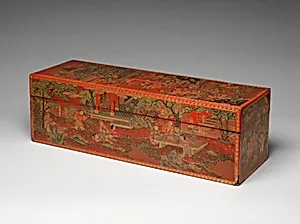
清 紅漆戧金嬰戯圖蓋盒|Box with boys at play
Unknown Artist
19th century
Medium
Red lacquer with incised decoration inlaid with gold
Dimensions
H. 10 in. (25.4 cm); W. 9 3/4 in. (24.8 cm); L. 30 1/4 in. (76.8 cm)
Classification
Lacquer
Culture & Period
China · Qing dynasty (1644–1911)
Department
Asian Art
Museum
Metropolitan Museum of Art, New York, NY
Credit
Bequest of Stephen Whitney Phoenix, 1881
Accession Number
81.1.141a–c
Rights
Public Domain
Tags
Art Historical Context
This exquisite Qing dynasty box, titled *Box with Boys at Play* (清 紅漆戧金嬰戯圖蓋盒), dates to the 19th and exemplifies the refined artistry of Chinese lacquerware. Crafted from vibrant red lacquer with incised decoration inlaid with gold, the elongated rectangular form—measuring 10 inches high, 9¾ inches wide, and an impressive 30¼ inches—suggests it was designed to store scrolls, documents, or ceremonial items. The lid features lively scenes of boys engaged in playful activities, a motif that brings a sense of youthful energy and delight to this functional object. The technique, known as *hongqi jintian* (red lacquer with gold inlay), involved meticulously incising designs into multiple layers of lacquer and filling the grooves with fine gold powder, creating a shimmering, durable surface that withstands time. Lacquerware reached new heights of sophistication during the Qing period (1644–1911), prized by the imperial court and elite for its glossy finish and symbolic depth. Red, symbolizing good fortune, combined with gold for opulence, made such pieces status symbols. Scenes of boys at play held cultural significance, evoking wishes for prosperity, fertility, and family harmony—auspicious themes in Chinese art. Bequeathed to the Metropolitan Museum of Art in 1881 by Stephen Whitney Phoenix, this box offers a window into everyday elegance of late imperial China, blending utility with masterful decoration.