
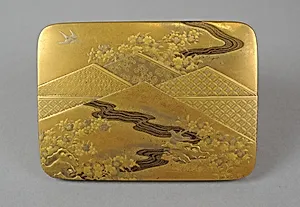
Box with Folded Brocade Pattern
Unknown Artist
19th century
Medium
Gold and silver maki-e on gold lacquer
Dimensions
H. 3/4 in. (1.9 cm); W. 2 7/8 (7.3 cm); D. 4 in. (10.2 cm)
Classification
Lacquer
Culture & Period
Japan · Meiji period (1868–1912)
Department
Asian Art
Museum
Metropolitan Museum of Art, New York, NY
Credit
Bequest of Stephen Whitney Phoenix, 1881
Accession Number
81.1.192
Rights
Public Domain
Tags
Art Historical Context
This exquisite *Box with Folded Brocade Pattern crafted in Japan during the Meiji period (1868–1912), exemplifies the pinnacle of traditional lacquerware artistry. just 3/4 inch high, 2 7/8 inches wide, and 4 inches, this petite gold-lacquered box is adorned with gold and silver *maki-e*—a revered technique where fine metal powders are sprinkled onto wet lacquer to create shimmering, raised designs. The intricate patterns mimic the luxurious folds of brocade silk fabric, interspersed with delicate motifs of birds and flowers, evoking nature's harmony and seasonal beauty. In the Meiji era, as Japan rapidly modernized and opened to the West, artisans preserved and refined classical crafts like lacquerwork, often producing such items for elite use or export. These small boxes likely held cosmetics, sweets, or precious objects, blending functionality with opulent decoration. The birds and floral elements symbolize prosperity, longevity, and the fleeting elegance of life, rooted in Japanese aesthetics. Now housed in the Metropolitan Museum of Art's Asian Art Department—thanks to the 1881 bequest of Stephen Whitney Phoenix—this piece invites us to appreciate the meticulous patience behind *maki-e*, where layers of lacquer are built over months. A testament to Japan's enduring craft heritage amid transformation.